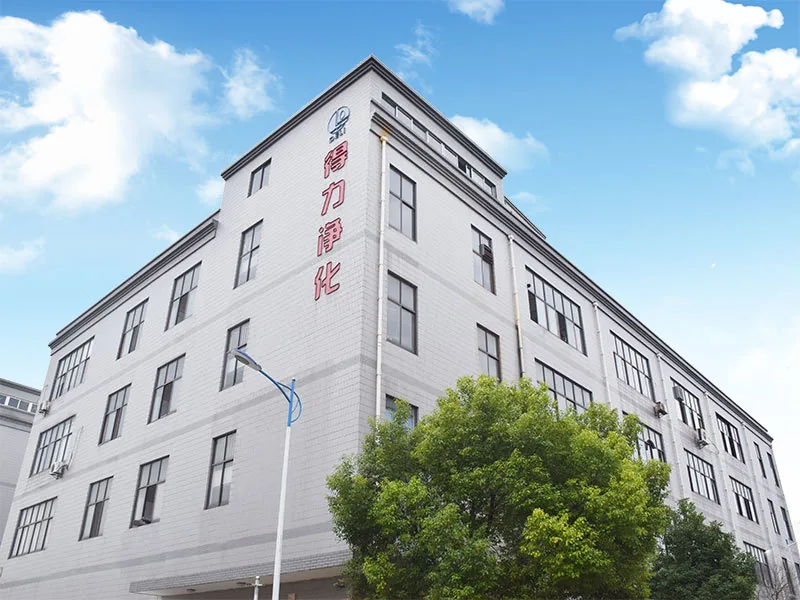
Sourcing air filters from China offers significant cost advantages, but for B2B buyers and brand owners, the challenge is separating high-quality manufacturers from middleman trading companies. When your brand reputation depends on the performance of a humidifier wick or an HAF filter, your choice of manufacturing partner is everything.
1. Verify Certifications — Not Just Claims
In the filtration industry, certifications are the baseline for quality. Don't just take a "we are ISO certified" claim at face value. Ask for the ISO 9001:2015 (Quality Management) and ISO 14001 (Environmental Management) certificate copies. Most importantly, verify the certificate numbers on the official registrar's website.
At Nantong Deli, our quality management systems are audited regularly to ensure that every filter—whether it's for a medical-grade application or a residential humidifier—meets international standards.
2. Evaluate Technical Capability, Not Just Price
The lowest price often comes at the cost of technical precision. A true OEM partner should have an in-house R&D team and testing infrastructure. Look for manufacturers that hold their own intellectual property.
For example, Nantong Deli holds 53 authorized patents. Our R&D department is led by PhD-level engineers who specialize in electrostatic media and anti-microbial treatments. This depth of knowledge allows us to troubleshoot performance issues before they reach your customers.
3. Assess Sample Lead Times and Production Flexibility
Time-to-market is a competitive advantage. A professional manufacturer should be able to provide custom samples within 7–10 days. If a company takes three weeks just to send a sample, they likely don't have the internal engineering speed to handle a full-scale production crisis.
Additionally, check for Minimum Order Quantity (MOQ) flexibility. While large-scale factories prefer high volumes, a good partner will work with you on initial trial runs to validate the market.
4. Understand Private Label and Packaging Capabilities
If you are selling on Amazon or through retail channels, your packaging is your first impression. Does the manufacturer offer "retail-ready" solutions? This includes:
- Custom printed boxes with your branding.
- UPC/EAN barcode application.
- Inserts and multi-pack shrink-wrapping.
5. Validate Export Experience
Exporting air filters involves complex logistics and compliance (such as REACH or RoHS for European markets). A manufacturer with a global footprint understands these nuances. Nantong Deli currently exports to 50+ countries, including the US, UK, Germany, Australia, and Japan. This experience ensures smoother customs clearance and familiarization with global shipping standards.
Questions to Ask Before Your First OEM Order
- Can you provide a factory audit report from a third party like SGS or Intertek?
- What is your internal failure rate for the last 12 months?
- Do you have in-house testing equipment for airflow resistance and particle capture?
- Are your raw materials sourced from consistent, traceable suppliers?
- Can you handle custom die-cutting for non-standard filter dimensions?
- What is your typical lead time for a 40HQ container?
- How do you handle warranty claims or defective batches?
Conclusion
Choosing a Chinese air filter manufacturer is about finding a balance between cost, quality, and communication. By focusing on technical credentials and export history, you can build a supply chain that scales with your business.
→ Start Your OEM Project with Nantong Deli
Explore our specialized products like Humidifier Wicks or learn more About Our Factory.